Wet Scrubbers vs. Dry Scrubbers: Selecting the Right Industrial Scrubber System for Your Process
When it comes to air pollution control and gas treatment in industrial facilities, few decisions carry more operational weight than selecting the right scrubbing technology. Whether you manage a chemical plant, a food processing facility, a power generation station, or a pharmaceutical manufacturing site, choosing the correct industrial scrubber system can mean the difference between consistent compliance and costly downtime. Both wet and dry scrubbers serve critical functions in removing contaminants from process gas streams, but they operate on fundamentally different principles and are suited to very different applications.
This guide breaks down the key differences between wet and dry scrubbing technologies, the conditions that favor each approach, and the engineering considerations that should drive your selection process.
What Is an Industrial Scrubber?
Before comparing technologies, it helps to understand what a scrubber actually does. At its core, an industrial scrubber is a pollution control device designed to remove particulates, acidic gases, volatile organic compounds (VOCs), and other contaminants from an exhaust or process gas stream before that stream is discharged to the atmosphere or returned to the process.
Scrubbers are widely used in industries including:
- Chemical processing and petrochemical refining
- Power generation (coal and natural gas plants)
- Pulp and paper manufacturing
- Food and beverage processing
- Pharmaceutical production
- Metal smelting and foundry operations
- Water treatment and waste management
The technology you select depends on the nature of the contaminants, your process conditions, regulatory requirements, and the resources available at your facility.
How Wet Scrubbers Work
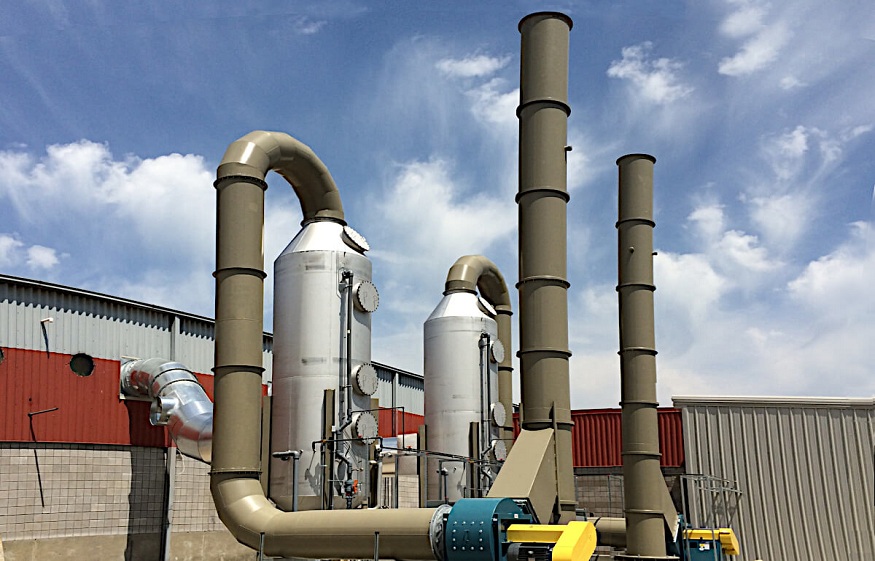
Wet scrubbers remove contaminants by bringing the process gas stream into direct contact with a liquid, most commonly water or a water-based chemical solution. The contaminant-laden gas passes through or across the scrubbing liquid, which captures particulates, absorbs soluble gases, and neutralizes reactive compounds.
Read More: Charles Spinelli Adds Meaning to Business Insurance and the Value of Financial Readiness
The liquid then carries the captured contaminants out of the scrubber as a slurry or solution, which must be collected, treated, and properly disposed of or recycled.
Common wet scrubber configurations include:
- Venturi scrubbers: The gas stream passes through a venturi throat where it accelerates and mixes vigorously with scrubbing liquid, creating high-energy contact.
- Packed bed scrubbers: Gas flows through a bed of packing material that is continuously wetted with scrubbing liquid, creating extended surface area for absorption.
- Spray tower scrubbers: Liquid is sprayed into a tower through which gas flows, capturing particulates and soluble gases.
- Jet scrubbers: Use the energy of a liquid jet to entrain and treat gas streams, with no moving parts required.
When to Choose a Wet Scrubber
Wet scrubbers are generally the preferred choice when:
Your process involves sticky or hygroscopic particulates. Dry collection systems can struggle with particulates that clump together, absorb moisture, or adhere to filter surfaces. Wet scrubbers handle these materials without blinding or plugging.
You need simultaneous particulate and gas removal. A single wet scrubber can capture both particulate matter and soluble gas-phase contaminants such as hydrogen chloride (HCl), sulfur dioxide (SO2), or ammonia (NH3). Dry systems typically require separate equipment for each.
The process stream contains high-temperature gases. Wet scrubbers cool and condition the gas stream simultaneously, which is valuable when handling hot process exhaust that could damage downstream equipment.
You are dealing with flammable or explosive dusts. Wet scrubbers inherently reduce the risk of dust ignition by saturating particulates with liquid, making them a preferred choice in applications involving combustible materials.
The process produces soluble contaminants. When the target contaminant dissolves readily in water or a chemical solution, wet scrubbing provides highly efficient removal with relatively straightforward engineering.
Limitations of Wet Scrubbers
Wet scrubbers do come with trade-offs that must be carefully considered:
Read More: Two Very Different Market Stories: Consumer Strength and Telecom Survival
- They generate liquid waste streams (scrubber liquor or slurry) that require treatment and disposal, adding to operating cost and regulatory complexity.
- The scrubbing liquid can freeze in cold climates, creating operational challenges for outdoor installations.
- Corrosion is a persistent concern, particularly when scrubbing acidic gases. Material selection becomes critical, with options ranging from fiberglass and rubber-lined steel to exotic alloys depending on the chemical environment.
- Energy consumption can be higher than dry alternatives, particularly in high-pressure-drop venturi designs.
How Dry Scrubbers Work
Dry scrubbers remove contaminants from a gas stream without introducing liquid into the process. Instead, a dry sorbent, typically a calcium-based reagent such as hydrated lime or sodium bicarbonate, is injected into the gas stream or applied across a filter bed. The sorbent reacts chemically with the target contaminants and is then collected as a dry solid.
Common dry scrubber configurations include:
- Spray dry absorbers (SDA): A slurry of sorbent is atomized into the gas stream, which dries the slurry while the sorbent reacts with contaminants. The solid residue is then collected by a downstream fabric filter or electrostatic precipitator.
- Dry sorbent injection (DSI): Dry reagent is injected directly into the gas duct and reacts with contaminants in flight before being collected.
- Circulating dry scrubbers (CDS): Sorbent is continuously recirculated through the system to increase utilization and efficiency.
When to Choose a Dry Scrubber
Dry scrubbers tend to be the preferred option when:
Water availability or disposal is a significant constraint. In regions where water is scarce, expensive, or tightly regulated, eliminating liquid waste streams offers a clear operational advantage.
The process operates in a cold climate. Without liquid in the process, dry systems avoid freeze-related operational disruptions and associated maintenance.
The exhaust stream is relatively cool and dry. Dry sorbents perform best when gas temperatures are moderate and there is no saturated moisture that could cause the reagent to cake or plug.
Regulatory requirements center on specific gaseous pollutants. Dry scrubbing is highly effective for acid gas control, particularly sulfur dioxide, hydrogen chloride, and hydrogen fluoride. It is widely used in waste-to-energy facilities, cement kilns, and industrial boilers for this purpose.
Your facility has limited footprint for liquid waste infrastructure. Dry systems avoid the need for wastewater sumps, effluent treatment systems, and associated piping, which can significantly reduce the total installed cost in constrained plant layouts.
Limitations of Dry Scrubbers
Dry scrubbers also carry design constraints:
- Reagent utilization is typically lower than in wet systems, meaning more sorbent may be consumed per unit of contaminant removed, increasing material costs.
- They are generally less effective at handling heavy particulate loads or high concentrations of soluble gases compared to well-designed wet scrubbers.
- Fine sorbent particles require careful downstream filtration to prevent carryover into the atmosphere.
- Sticky or hygroscopic contaminants can cause handling problems in dry sorbent feed and collection systems.
Key Engineering Variables That Drive the Selection Decision
Beyond the basic characteristics of each technology, several process-specific factors should be formally evaluated before a final selection is made:
Contaminant type and concentration. High concentrations of soluble acid gases typically favor wet scrubbing with alkaline solutions. Low concentrations of gaseous pollutants in a relatively clean gas stream may be handled cost-effectively with dry sorbent injection.
Particle size distribution. Very fine particulates (sub-micron range) are notoriously difficult to capture in both wet and dry systems, but the design response differs. High-energy wet scrubbing or specialized dry filtration may be required.
Gas volume and temperature. Large volume, high-temperature streams often benefit from the conditioning effect of wet scrubbers. Moderate-temperature, lower-volume streams may be served equally well by dry approaches.
Liquid waste infrastructure. If your facility already has robust wastewater treatment capabilities, the added burden of wet scrubber effluent may be manageable. If not, the cost of building that infrastructure should be factored into the economic analysis.
Regulatory requirements. Review applicable federal, state, and local emission limits carefully. Some regulatory frameworks specifically prescribe or prefer certain control technologies for given industries or pollutant categories.
Total cost of ownership. Capital cost, operating cost (reagent, energy, waste disposal), maintenance requirements, and expected service life all factor into a complete economic comparison. The lower-cost technology to install is not always the lower-cost technology to operate over a 15 to 20-year plant life.
A Practical Framework for Decision-Making
When facing a scrubber selection decision, experienced process engineers typically work through the following sequence:
- Characterize the gas stream fully, including flow rate, temperature, composition, particulate loading, and moisture content.
- Identify all regulated pollutants and applicable emission limits.
- Assess site constraints, including water availability, space, infrastructure, and climate.
- Develop a short list of technically feasible technologies based on the above.
- Conduct a comparative economic analysis covering capital, operating, and maintenance costs.
- Evaluate supplier experience with similar applications and the availability of engineered customization for your specific process.
For complex or unusual process streams, it is advisable to work directly with an experienced manufacturer that can provide application-specific engineering support rather than relying solely on generic catalog specifications.
Conclusion
Neither wet scrubbers nor dry scrubbers are universally superior. Each technology offers distinct advantages under the right process conditions, and selecting the wrong approach can result in underperformance, excessive operating costs, or compliance risk. A thorough evaluation of your gas stream characteristics, site constraints, regulatory environment, and total cost of ownership is the foundation of a sound scrubber selection decision.
For industrial facilities with complex or highly variable process streams, working with a manufacturer that has deep application experience across multiple scrubber technologies is a practical way to reduce selection risk and ensure the engineered solution fits your actual operating conditions rather than a generic design standard.